There is a moment in every serious dive where the environment becomes absolute. Sound fades, movement slows, attention sharpens.
At depth, there is no margin for abstraction. Only what is known, what is measured, and what is decided.
Modern diving, however, rarely feels this way anymore. Over the past decades, dive computers have transformed the experience. They calculate decompression in real time, adjust for conditions, and guide the diver step by step through ascent profiles that once required careful planning and discipline. For many, they have become indispensable—trusted without question.
And yet, this trust introduces a subtle shift, from understanding to following, from awareness to dependency.
At depth, there is no margin for abstraction. Only what is known, what is measured, and what is decided.
Modern diving, however, rarely feels this way anymore. Over the past decades, dive computers have transformed the experience. They calculate decompression in real time, adjust for conditions, and guide the diver step by step through ascent profiles that once required careful planning and discipline. For many, they have become indispensable—trusted without question.
And yet, this trust introduces a subtle shift, from understanding to following, from awareness to dependency.
The Comfort of Automation
Technology is designed to reduce uncertainty. It removes the need to calculate, to remember, to interpret. It offers clarity, but also convenience—sometimes too much of it.
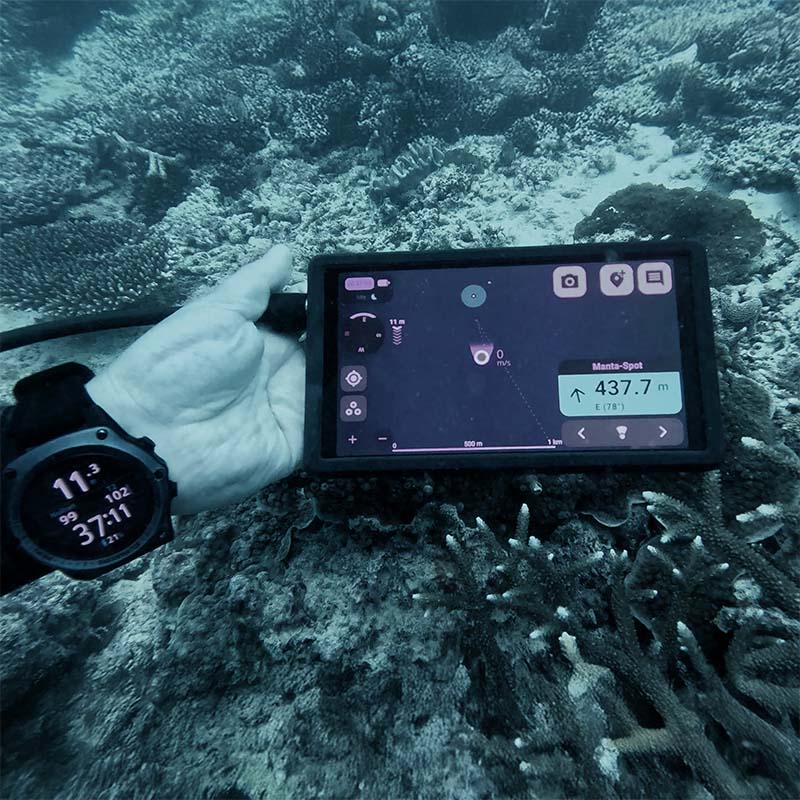
Divers today often descend with powerful computers on their wrists, devices capable of processing complex algorithms derived from decades of research. The logic is sound: why rely on manual interpretation when a machine can compute more accurately and more efficiently?
But reliance has a cost. When decision-making is outsourced, the underlying understanding tends to fade. The diver follows instructions rather than actively interpreting the situation. The process becomes reactive rather than deliberate.
This is not a criticism of technology. It is a reflection of how humans interact with it. Because technology, however advanced, remains conditional.
It depends on power, sensors and integrity of data. And occasionally, inevitably, it fails.
Divers today often descend with powerful computers on their wrists, devices capable of processing complex algorithms derived from decades of research. The logic is sound: why rely on manual interpretation when a machine can compute more accurately and more efficiently?
But reliance has a cost. When decision-making is outsourced, the underlying understanding tends to fade. The diver follows instructions rather than actively interpreting the situation. The process becomes reactive rather than deliberate.
This is not a criticism of technology. It is a reflection of how humans interact with it. Because technology, however advanced, remains conditional.
It depends on power, sensors and integrity of data. And occasionally, inevitably, it fails.
Failure Is Not Dramatic
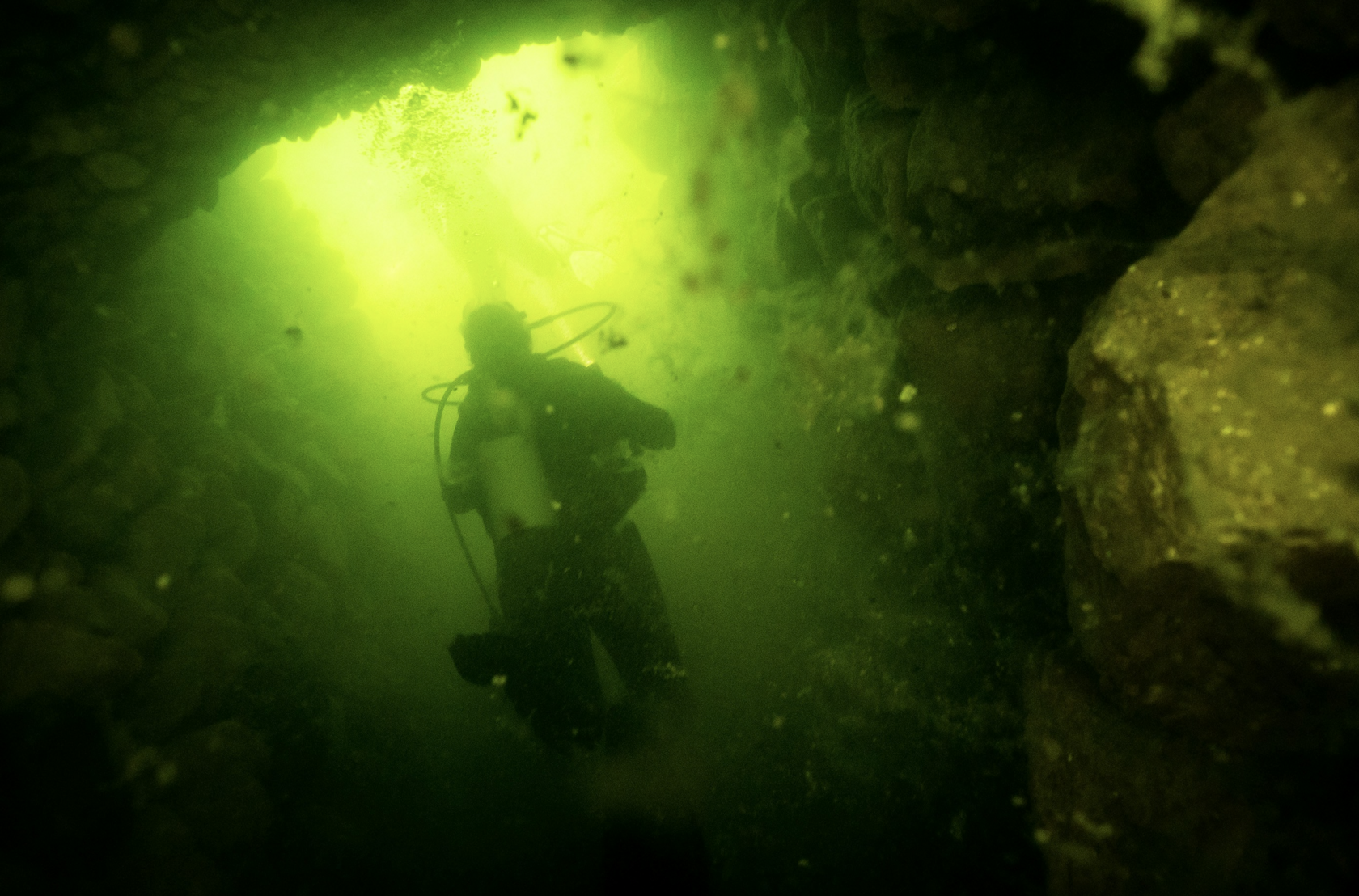
In reality, failure rarely announces itself. There is no sudden catastrophe. No cinematic moment. More often, it is quiet, a screen goes blank, a reading freezes or a signal becomes unreliable.
At 21 meters, during ascent, such a failure is not dramatic. But it is decisive. Without clear information, the diver is left with a simple but critical question: What now?
At 21 meters, during ascent, such a failure is not dramatic. But it is decisive. Without clear information, the diver is left with a simple but critical question: What now?
The Origin of Decompression Thinking
Long before digital instruments became standard, decompression was understood through models—structured, studied, and internalized.
Among the most influential was the work of Albert A. Bühlmann, whose research laid the foundation for modern decompression theory. His approach was not about simplifying diving, but about making it safer through knowledge. The Bühlmann model did not remove responsibility from the diver. It required engagement. It assumed that decisions would be made with awareness of the principles involved.
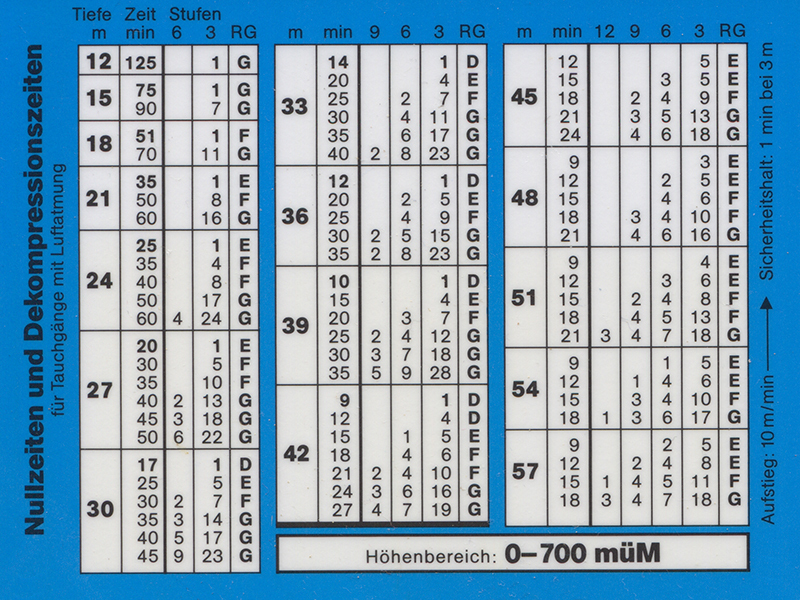
Dive tables were not merely references; they were tools for thinking. They demanded preparation, discipline and understanding.
Among the most influential was the work of Albert A. Bühlmann, whose research laid the foundation for modern decompression theory. His approach was not about simplifying diving, but about making it safer through knowledge. The Bühlmann model did not remove responsibility from the diver. It required engagement. It assumed that decisions would be made with awareness of the principles involved.
Dive tables were not merely references; they were tools for thinking. They demanded preparation, discipline and understanding.
The Role of a Mechanical Reference
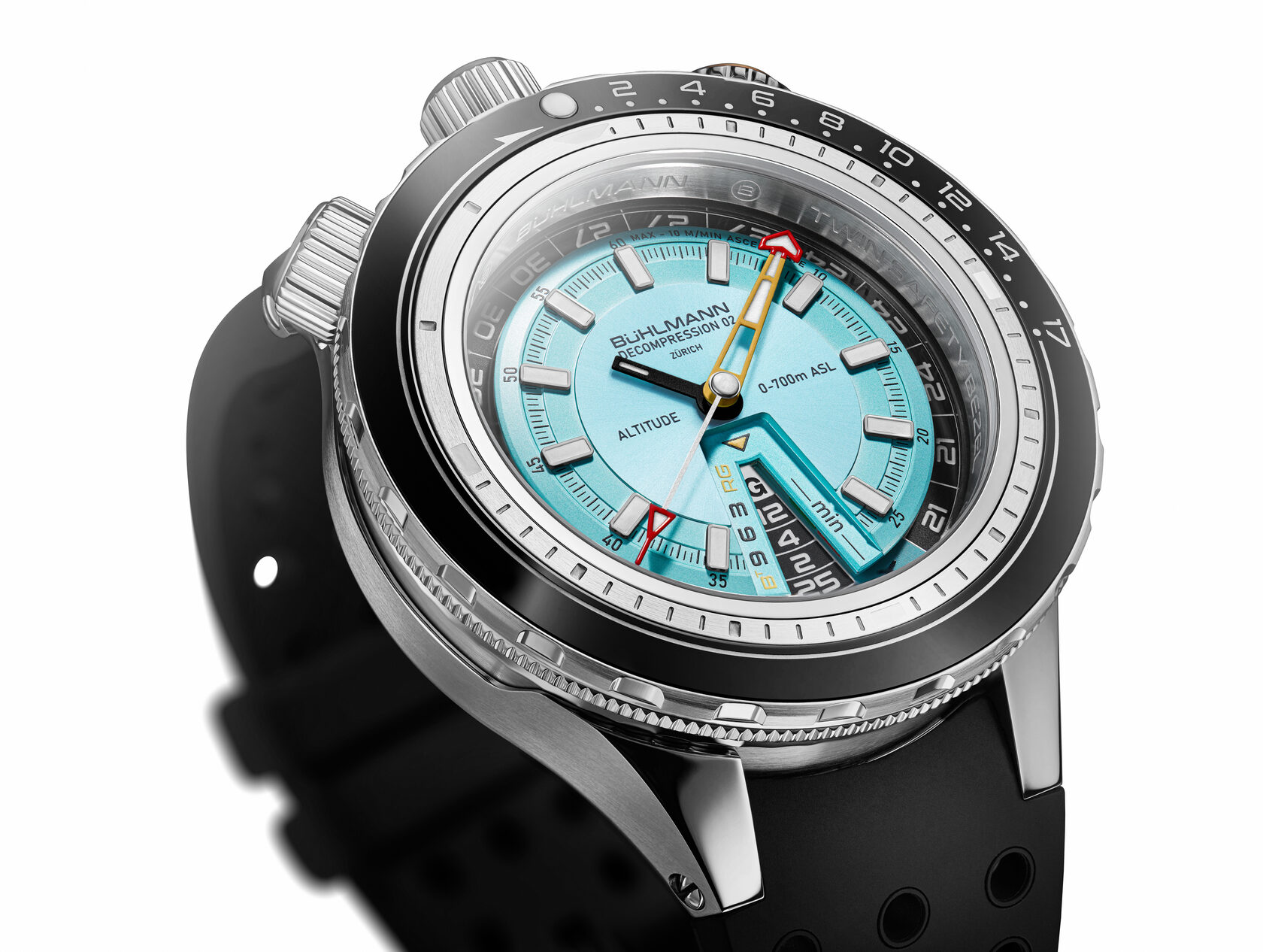
In this context, the role of a mechanical instrument becomes clear. It is not intended to replace modern dive computers. Nor does it compete with their capabilities. Instead, it serves a different function.
A mechanical reference does not calculate, it does not adapt and it does not guide. It simply remains, unaffected by battery life, unaffected by software, unaffected by signal. It offers continuity when other systems depend on conditions.
More importantly, it encourages a different posture from the diver: one of awareness, rather than reliance.
A mechanical reference does not calculate, it does not adapt and it does not guide. It simply remains, unaffected by battery life, unaffected by software, unaffected by signal. It offers continuity when other systems depend on conditions.
More importantly, it encourages a different posture from the diver: one of awareness, rather than reliance.
Designing for the Decisive Moment
The challenge, then, is not to recreate the past, but to reinterpret its principles in a contemporary form.
A decompression instrument designed for today must acknowledge both realities: The presence of advanced technology, and the necessity of independence from it. This is where purpose becomes visible in design.
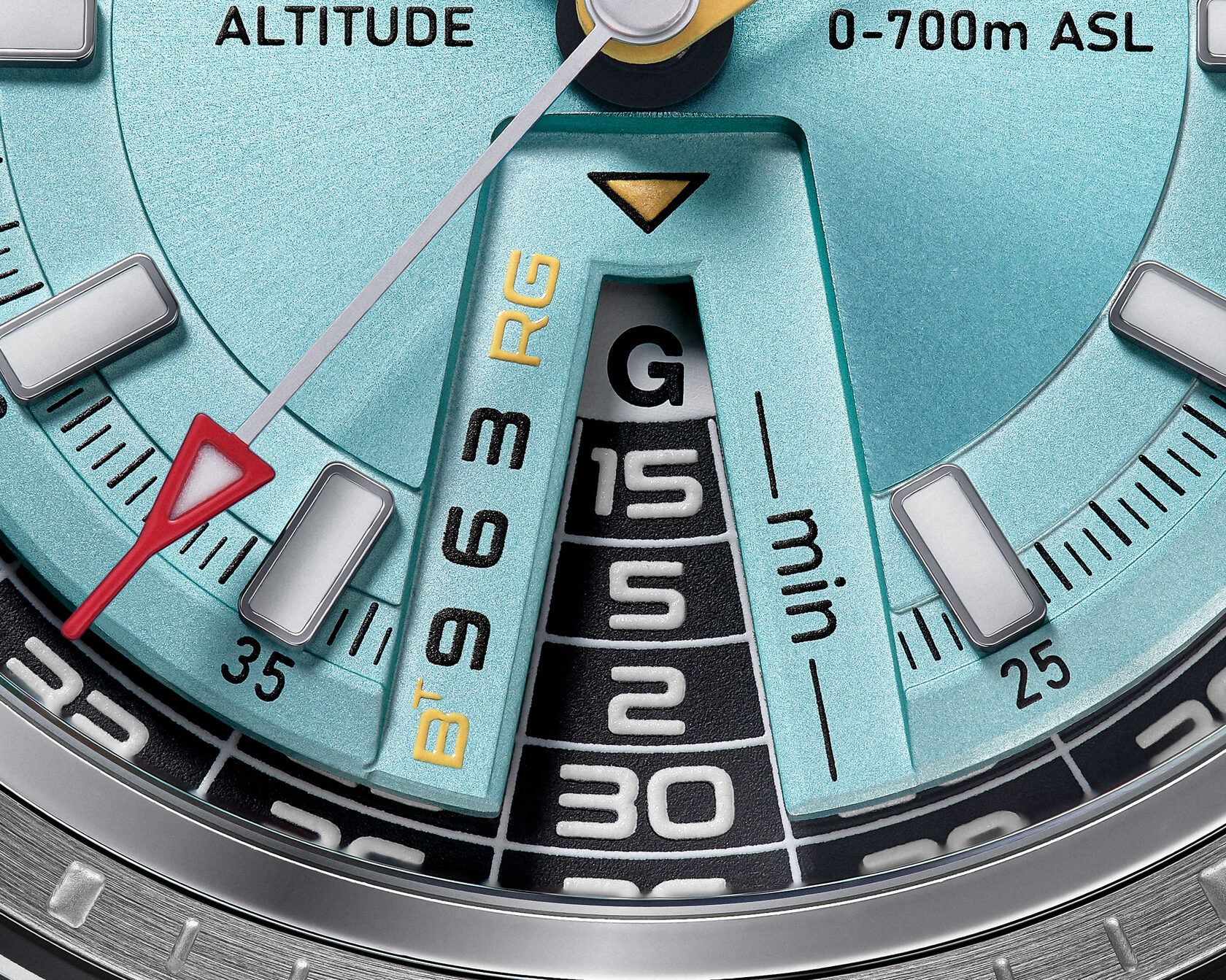
A decompression scale that can be read at a glance. a timing system that eliminates hesitation and a dial that prioritises recognition over interpretation.
Each element exists not as a feature, but as a response to a specific moment: the moment when clarity is required without assistance.
A decompression instrument designed for today must acknowledge both realities: The presence of advanced technology, and the necessity of independence from it. This is where purpose becomes visible in design.
A decompression scale that can be read at a glance. a timing system that eliminates hesitation and a dial that prioritises recognition over interpretation.
Each element exists not as a feature, but as a response to a specific moment: the moment when clarity is required without assistance.
Beyond Utility
There is, of course, another dimension: Objects shape behavior.
A diver equipped only with automated systems may approach a dive differently from one who maintains an independent reference. Not necessarily better or worse, but differently.
More attentive, perhaps. Surely more engaged and more responsible. In this sense, a mechanical instrument is not only a tool. It is a reminder that control is not given, but that it is maintained.
A diver equipped only with automated systems may approach a dive differently from one who maintains an independent reference. Not necessarily better or worse, but differently.
More attentive, perhaps. Surely more engaged and more responsible. In this sense, a mechanical instrument is not only a tool. It is a reminder that control is not given, but that it is maintained.
The Question That Remains
When everything functions as expected, any system feels reliable. But reliability is not defined by normal conditions. It is defined by exceptions, and so the question remains:
Not what works when everything works, but what remains when something does not.
Not what works when everything works, but what remains when something does not.
The Bühlmann Decompression 02 -a considered instrument
The Decompression 02 an answer to the question, designed to replace technology. It exists alongside it as an independent reference, for those who choose to remain in control.
Produced in a strictly limited series of 575 pieces, it reflects a different approach to diving watches.
Not only design but purpose for moments that matter.
Produced in a strictly limited series of 575 pieces, it reflects a different approach to diving watches.
Not only design but purpose for moments that matter.
Learn more about the Bühlmann Decompression 02