The Algorithm That Still Takes Divers Home
More than 40 years after it was created, Dr. Albert A. Bühlmann's decompression model remains the foundation of modern recreational diving.
Every dive computer seems different.
Some are made in Finland, others in the United States, Italy, Germany or Japan. They have different screens, different interfaces and different features. Yet beneath all that technology, many of them still rely on the same scientific breakthrough.
The work of Swiss physician Dr. Albert A. Bühlmann.
A Question That Changed Diving
Before dive computers, decompression was planned using printed tables.
Divers calculated how long they could stay at a given depth and how they should ascend to avoid decompression sickness. The process worked, but it was based on fixed profiles and left little room for the countless variations of real dives.
Dr. Bühlmann wanted to answer a simple but vital question:
How can we accurately predict what happens inside the human body under pressure?
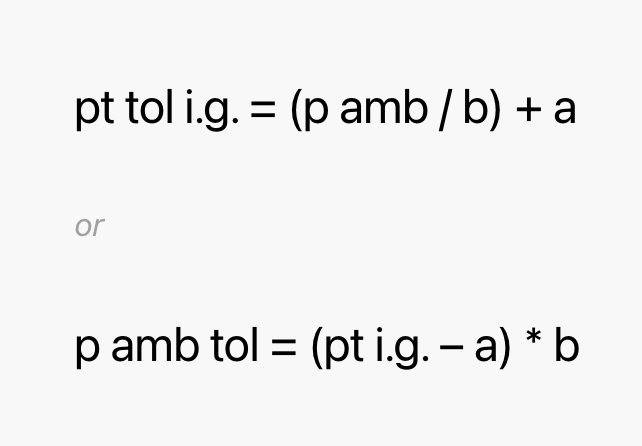
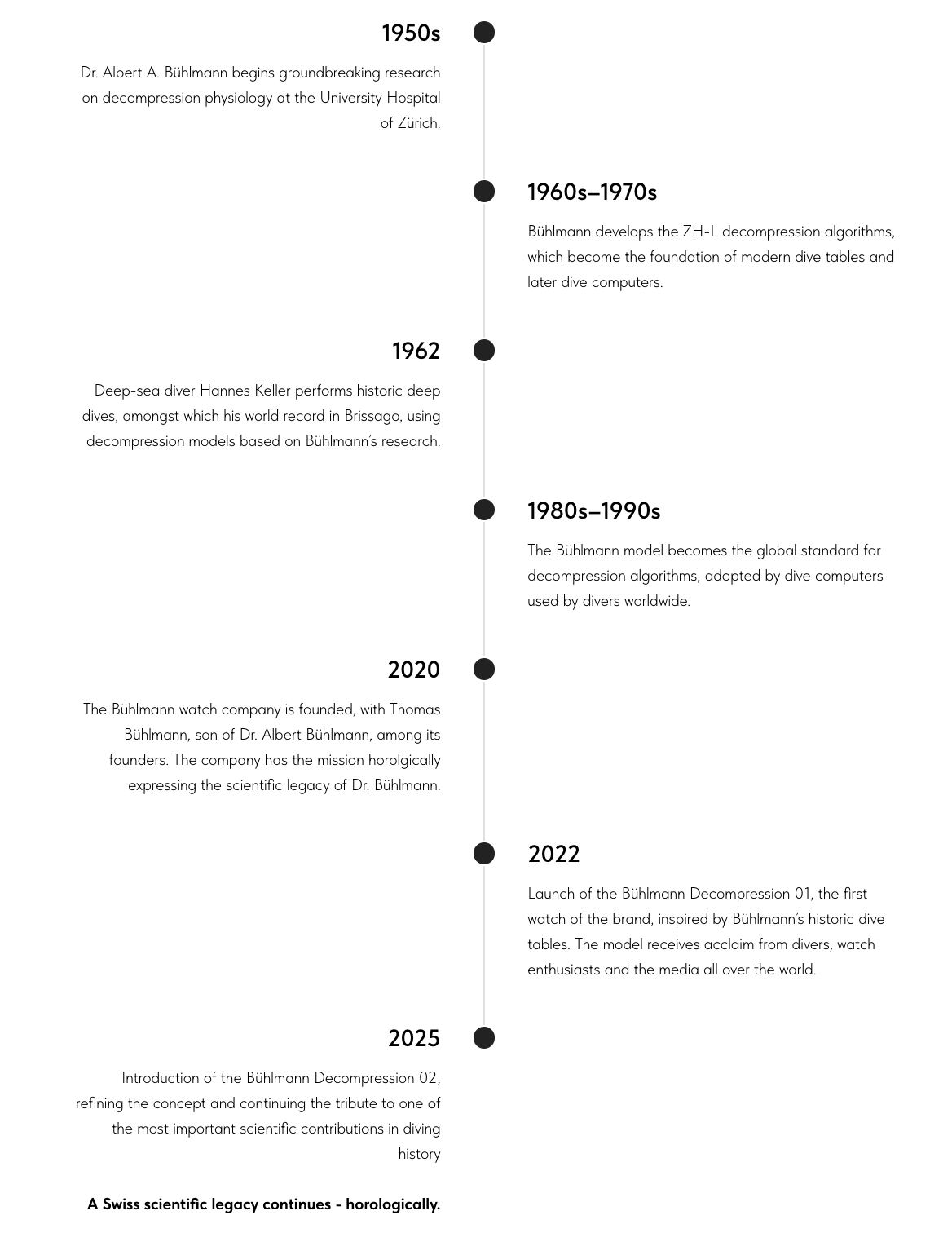
After decades of research in the pressure chambers of the University Hospital of Zurich, he developed what became known as the ZH-L decompression model.
It was one of the most comprehensive mathematical models ever created to describe how nitrogen is absorbed and released by the body's tissues during a dive.
The Language of Modern Dive Computers
Today's dive computers no longer use printed tables, instead, they perform thousands of calculations every second. But what are they calculating?
In many cases, they are calculating the Bühlmann model.
Whether your computer displays no-decompression time, required decompression stops or your ascent ceiling, the calculations are often based on Dr. Bühlmann's work, sometimes with manufacturer-specific conservatism added through gradient factors or other safety settings.
The screen may look modern, but the science underneath has remarkably familiar roots.
More than 40 years after it was created, Dr. Albert A. Bühlmann's decompression model remains the foundation of modern recreational diving.
Every dive computer seems different.
Some are made in Finland, others in the United States, Italy, Germany or Japan. They have different screens, different interfaces and different features. Yet beneath all that technology, many of them still rely on the same scientific breakthrough.
The work of Swiss physician Dr. Albert A. Bühlmann.
A Question That Changed Diving
Before dive computers, decompression was planned using printed tables.
Divers calculated how long they could stay at a given depth and how they should ascend to avoid decompression sickness. The process worked, but it was based on fixed profiles and left little room for the countless variations of real dives.
Dr. Bühlmann wanted to answer a simple but vital question:
How can we accurately predict what happens inside the human body under pressure?
After decades of research in the pressure chambers of the University Hospital of Zurich, he developed what became known as the ZH-L decompression model.
It was one of the most comprehensive mathematical models ever created to describe how nitrogen is absorbed and released by the body's tissues during a dive.
The Language of Modern Dive Computers
Today's dive computers no longer use printed tables, instead, they perform thousands of calculations every second. But what are they calculating?
In many cases, they are calculating the Bühlmann model.
Whether your computer displays no-decompression time, required decompression stops or your ascent ceiling, the calculations are often based on Dr. Bühlmann's work, sometimes with manufacturer-specific conservatism added through gradient factors or other safety settings.
The screen may look modern, but the science underneath has remarkably familiar roots.
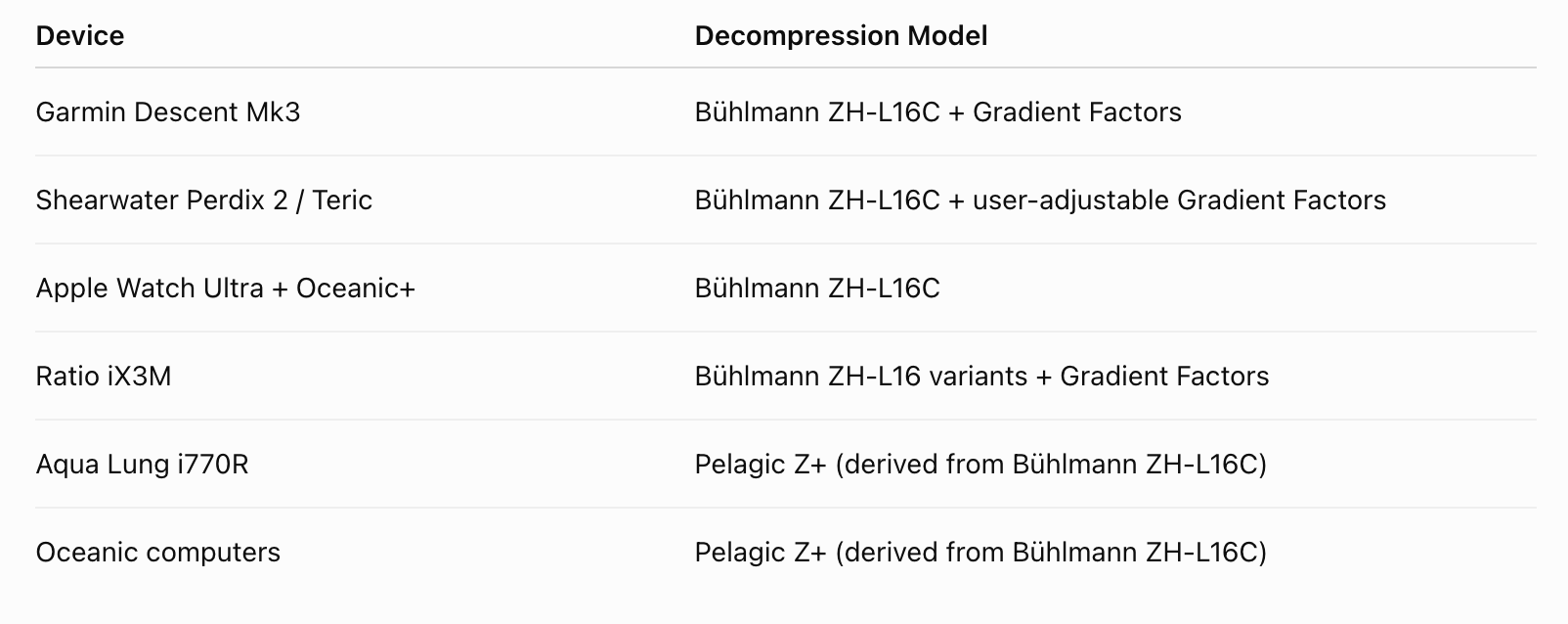
Today, whether you're diving with a dedicated technical computer like a Shearwater, a Garmin Descent, or even an Apple Watch Ultra running the Oceanic+ app, there's a good chance the decompression calculations keeping you safe are based on the scientific work of Dr. Albert A. Bühlmann.
An Algorithm That Evolved
The original Bühlmann model has not remained frozen in time.Manufacturers have adapted it and technical divers have introduced concepts such as Gradient Factors to adjust conservatism.
Researchers have refined implementations using modern computing power.
Yet, the fundamental physiological model developed in Zurich continues to serve as the starting point for countless dive computers around the world. That is perhaps the greatest compliment any scientific work can receive.
It has stood the test of time.
From Computer to Mechanical Instrument
At Bühlmann Watches, we never set out to compete with dive computers.
Modern computers remain the safest and most practical primary instrument for diving. Instead, we asked a different question: Could the scientific legacy of Dr. Albert A. Bühlmann be transformed into something mechanical?
The result is the Bühlmann Decompression collection.
Rather than displaying digital calculations, the watch allows divers to manually calculate and time decompression stops using the same scientific principles that changed diving decades ago.
The original Bühlmann model has not remained frozen in time.Manufacturers have adapted it and technical divers have introduced concepts such as Gradient Factors to adjust conservatism.
Researchers have refined implementations using modern computing power.
Yet, the fundamental physiological model developed in Zurich continues to serve as the starting point for countless dive computers around the world. That is perhaps the greatest compliment any scientific work can receive.
It has stood the test of time.
From Computer to Mechanical Instrument
At Bühlmann Watches, we never set out to compete with dive computers.
Modern computers remain the safest and most practical primary instrument for diving. Instead, we asked a different question: Could the scientific legacy of Dr. Albert A. Bühlmann be transformed into something mechanical?
The result is the Bühlmann Decompression collection.
Rather than displaying digital calculations, the watch allows divers to manually calculate and time decompression stops using the same scientific principles that changed diving decades ago.
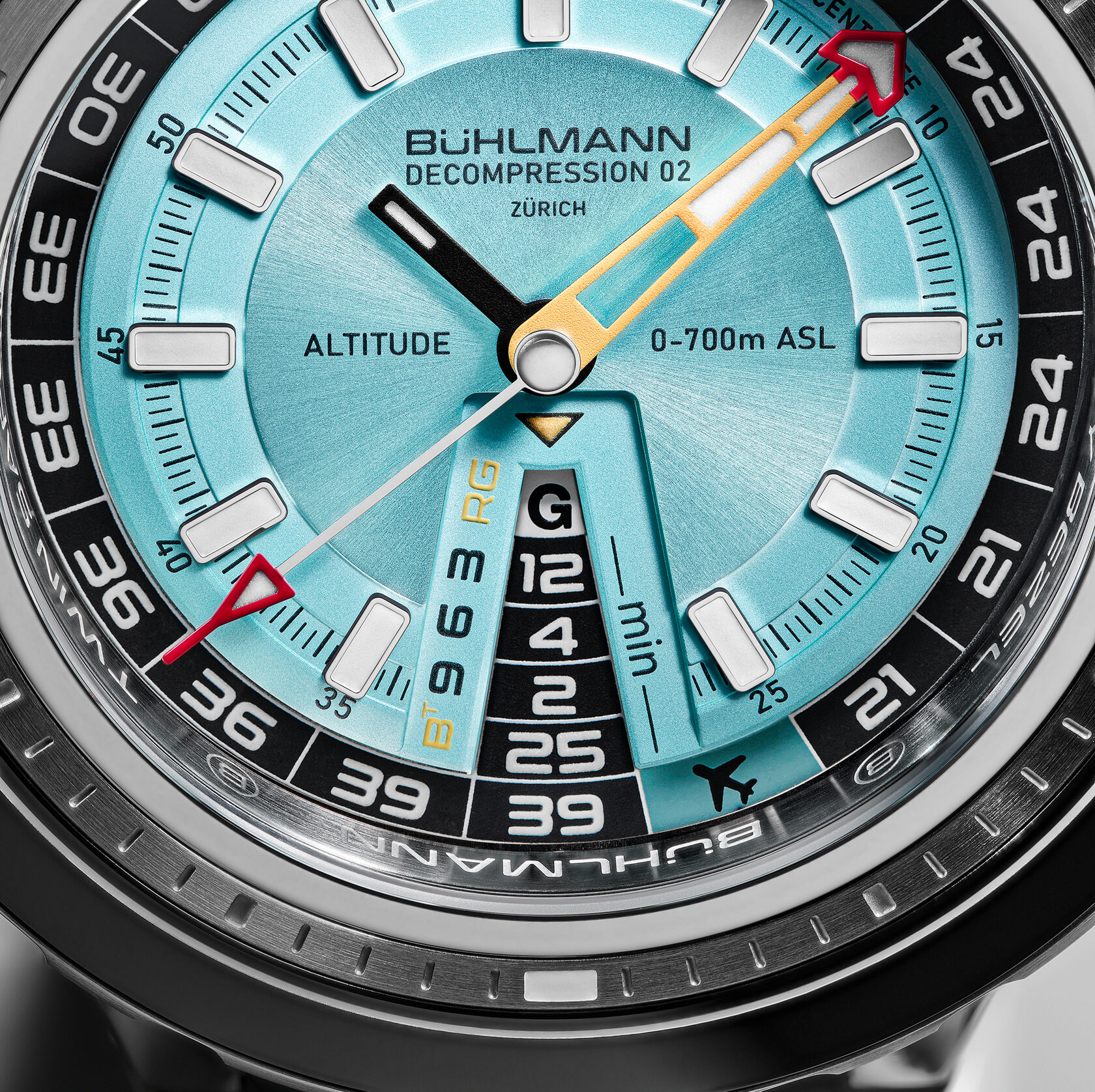
It is both a practical mechanical back-up instrument and a tribute to one of Switzerland's greatest scientific contributions to underwater exploration.
A Legacy That Lives On
Most scientific discoveries quietly disappear into the technology they inspire. Few people know the names behind the equations running inside their devices.
But every time a diver checks remaining no-decompression time or follows ascent guidance on a modern dive computer, there is a good chance they are benefiting from the work begun by Dr. Albert A. Bühlmann.
His name may not appear on the screen, but his science is still there.
And for us, that legacy deserved more than a line in a textbook.
A Legacy That Lives On
Most scientific discoveries quietly disappear into the technology they inspire. Few people know the names behind the equations running inside their devices.
But every time a diver checks remaining no-decompression time or follows ascent guidance on a modern dive computer, there is a good chance they are benefiting from the work begun by Dr. Albert A. Bühlmann.
His name may not appear on the screen, but his science is still there.
And for us, that legacy deserved more than a line in a textbook.
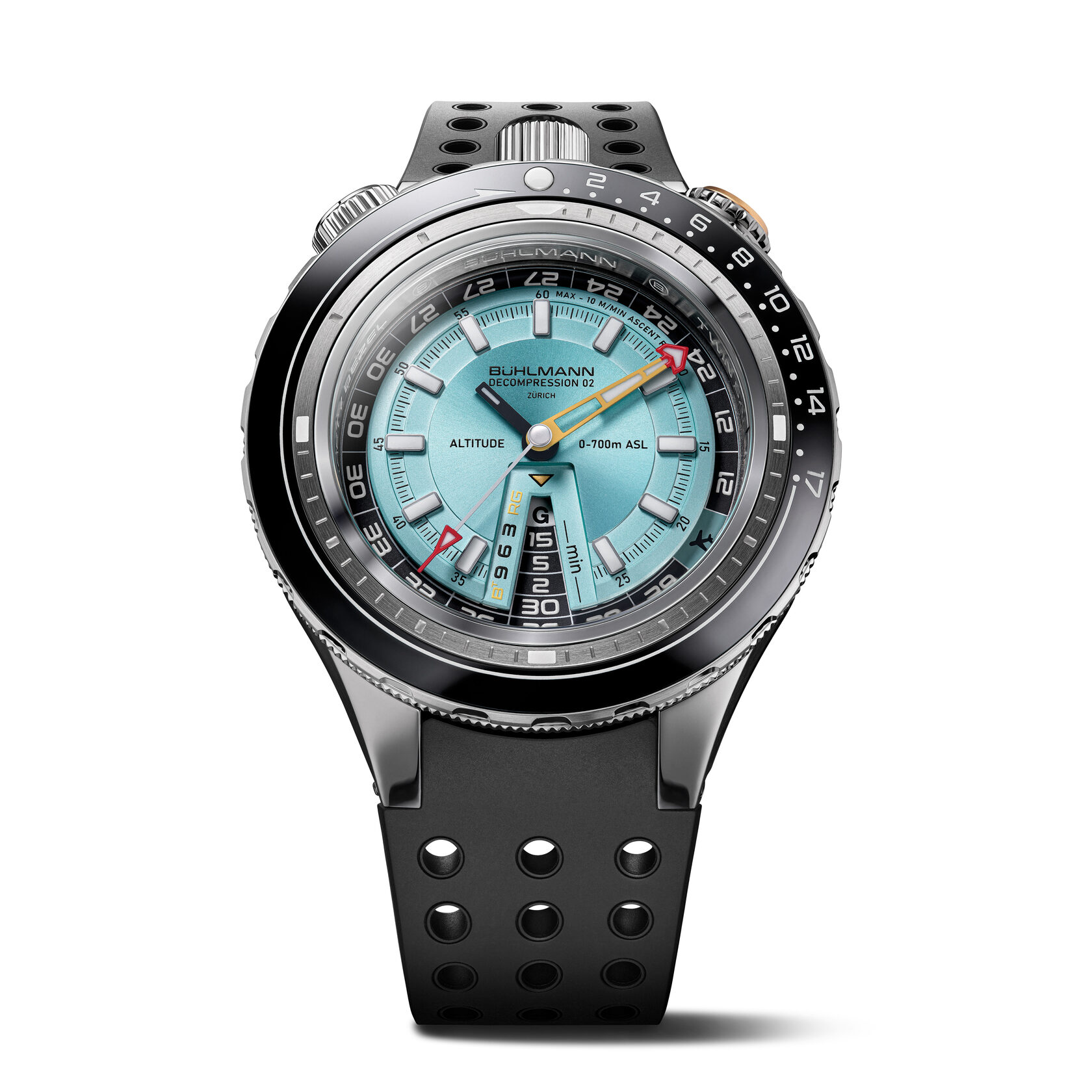
Learn more about the Bühlmann Decompression 02