When a diver descends beneath the surface, the rules of the body change.
Pressure increases with depth. And with it, the gases we breathe—primarily nitrogen—begin to dissolve into our tissues. The deeper and longer the dive, the more nitrogen the body absorbs.
This is not dangerous in itself. The danger comes on the way back up.
Pressure increases with depth. And with it, the gases we breathe—primarily nitrogen—begin to dissolve into our tissues. The deeper and longer the dive, the more nitrogen the body absorbs.
This is not dangerous in itself. The danger comes on the way back up.
The Invisible Risk
If a diver ascends too quickly, the pressure drops faster than the body can safely release the dissolved nitrogen.
Instead of leaving gradually through respiration, the gas forms bubbles inside the body. This is known as decompression sickness—or more simply, “the bends.”
Its effects range from mild discomfort to severe injury:
Decompression is therefore not a suggestion but a necessary discipline.
Instead of leaving gradually through respiration, the gas forms bubbles inside the body. This is known as decompression sickness—or more simply, “the bends.”
Its effects range from mild discomfort to severe injury:
- Joint and muscle pain
- Neurological symptoms
- In extreme cases, life-threatening complications
Decompression is therefore not a suggestion but a necessary discipline.
What Decompression Actually Is
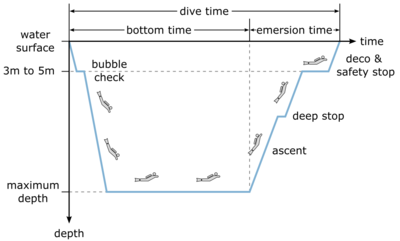
Decompression is the controlled process of returning to the surface in a way that allows the body to safely eliminate inert gases.
In practical terms, this means:
These stops, called decompression stops, are where safety happens.
Even in recreational diving, a simple “safety stop” at around 5 meters has become standard practice.
In more advanced or deeper dives, decompression becomes a structured sequence that must be followed precisely.
In practical terms, this means:
- Ascending slowly
- Respecting depth limits
- Making stops at specific depths for specific durations
These stops, called decompression stops, are where safety happens.
Even in recreational diving, a simple “safety stop” at around 5 meters has become standard practice.
In more advanced or deeper dives, decompression becomes a structured sequence that must be followed precisely.
From Tables to Algorithms
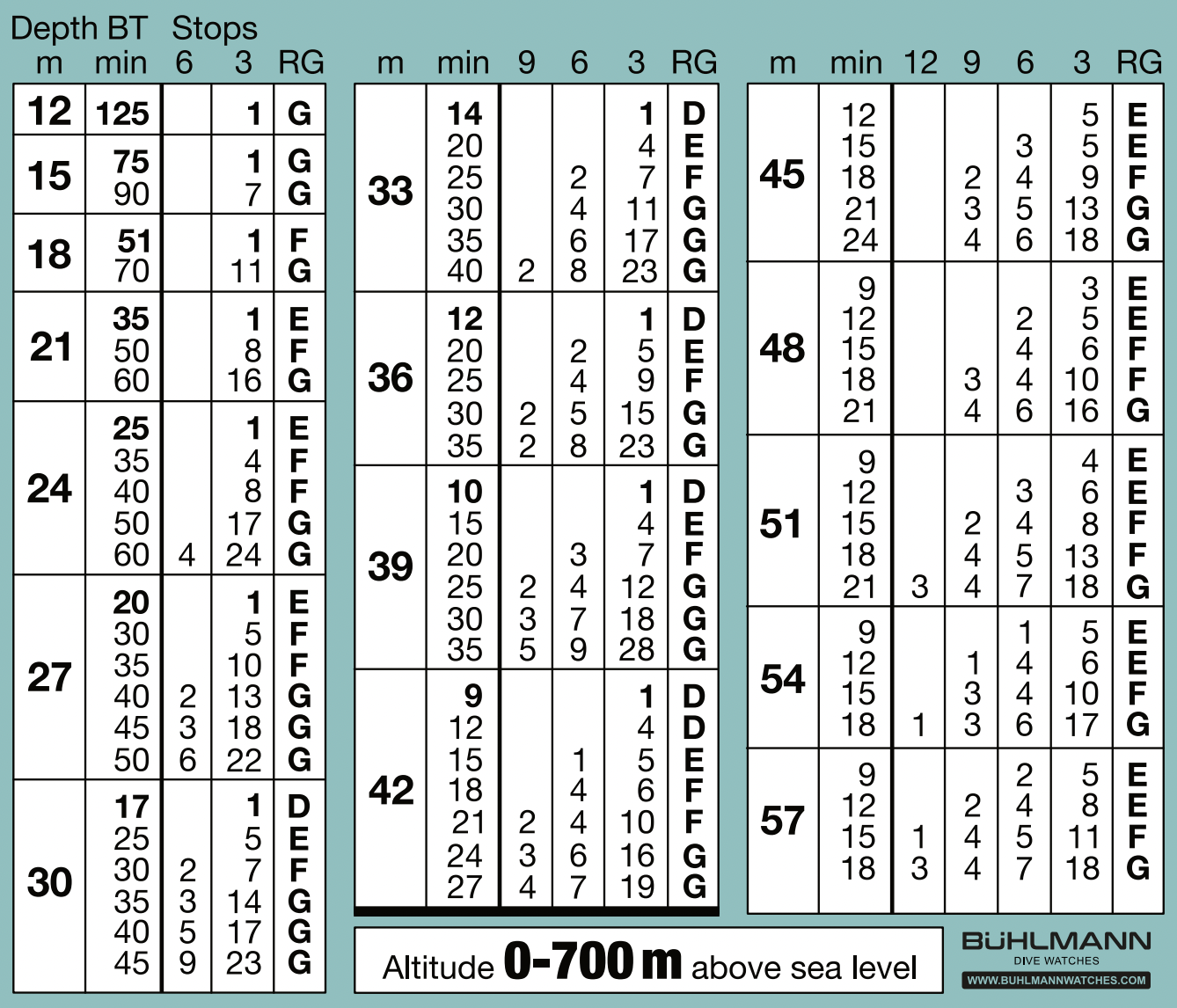
Historically, divers relied on printed decompression tables.
Among the most influential were those developed by Swiss physician Dr. Albert A. Bühlmann, whose work at the University of Zurich laid the foundation for modern decompression theory.
His models describe how different tissues in the body absorb and release gas at different rates—allowing divers to plan safe ascents.
Today, these principles power modern dive computers and planning tools. But the underlying reality remains unchanged: You are managing physics inside your own body.
Among the most influential were those developed by Swiss physician Dr. Albert A. Bühlmann, whose work at the University of Zurich laid the foundation for modern decompression theory.
His models describe how different tissues in the body absorb and release gas at different rates—allowing divers to plan safe ascents.
Today, these principles power modern dive computers and planning tools. But the underlying reality remains unchanged: You are managing physics inside your own body.
What You Need to Do as a Diver
Understanding decompression does not require being a scientist.
But it does require respect.
At a minimum:
Technology can assist but judgment remains essential.
But it does require respect.
At a minimum:
- Plan your dive within known limits
- Monitor depth and time carefully
- Ascend slowly and deliberately
- Never skip recommended stops
- Use reliable instruments—and understand them
Technology can assist but judgment remains essential.
When Technology Fails
Most divers today rely on digital dive computers.
They are powerful, precise and dependent on batteries, sensors, and electronics.
Failures are rare. But they happen.
And when they do, the diver is left with a simple question:
What do you trust?
This is where understanding decompression becomes more than theory. It becomes autonomy.
They are powerful, precise and dependent on batteries, sensors, and electronics.
Failures are rare. But they happen.
And when they do, the diver is left with a simple question:
What do you trust?
This is where understanding decompression becomes more than theory. It becomes autonomy.
A Mechanical Expression of Decompression
The legacy of Bühlmann’s work continues not only in algorithms, but also in how divers think about safety.
The Bühlmann Decompression 02 translates this logic into a mechanical instrument—offering a way to track and manage decompression independently of electronics.
Not as a replacement.
But as a parallel system of awareness.
A reminder that beneath every dive profile, there is a human body governed by physical laws and not software.
The Bühlmann Decompression 02 translates this logic into a mechanical instrument—offering a way to track and manage decompression independently of electronics.
Not as a replacement.
But as a parallel system of awareness.
A reminder that beneath every dive profile, there is a human body governed by physical laws and not software.
Final Thought
Decompression is not a complication added to diving. It is what makes diving possible.
Master it, and you move through depth with control.
Ignore it, and the consequences are immediate—and often invisible until it is too late.
In diving, as in life:
Pressure is not the enemy. Mismanaging it is.
Master it, and you move through depth with control.
Ignore it, and the consequences are immediate—and often invisible until it is too late.
In diving, as in life:
Pressure is not the enemy. Mismanaging it is.
Learn more about the Bühlmann Decompression 02